The Hidden Threat Lurking in Your Supply Chain
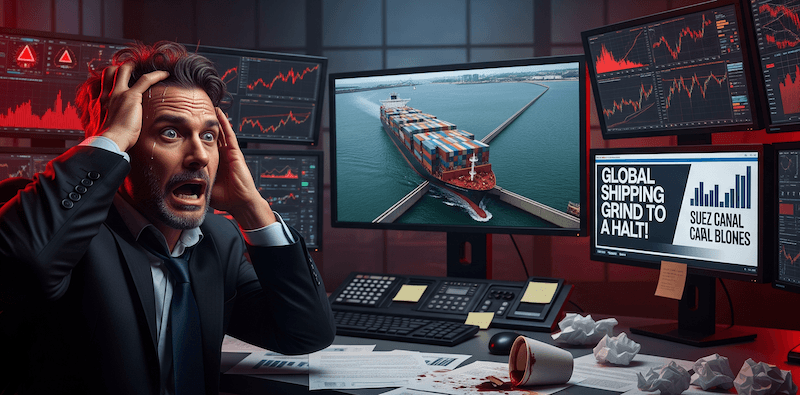
In March 2021, a single container ship blocked the Suez Canal for six days. The result? Billions of dollars worth of goods were lost, and global supply chains ground to a halt. This incident perfectly illustrates a harsh reality: traditional supplier due diligence processes are failing to protect businesses from modern supply chain risks.
If your company is still relying on static assessments, annual reviews, and checkbox compliance, you're not just missing opportunities—you're exposing your business to catastrophic risks that could destroy years of growth in a matter of days.
The Fatal Flaws in Traditional Due Diligence
Beyond Cost and Delivery: The Expanded Risk Landscape
Traditional supplier due diligence focused primarily on two metrics: cost efficiency and on-time delivery. But today's supply chain risks extend far beyond these basic performance indicators. Modern supplier health encompasses overall performance, reliability, and financial stability, requiring a more sophisticated approach to risk assessment.
The complexity of globally outsourced supply chains, combined with efficiency-focused techniques like lean and just-in-time manufacturing, has created unprecedented vulnerabilities. Even minor disruptions can cascade through your entire operation, causing:
- Sourcing disruptions that halt production
- Demand spikes that expose capacity limitations
- Inventory flow issues that create bottlenecks
- Manufacturing disruptions that impact quality
- Labor shortages that delay deliveries
- Price increases that erode profitability
The Regulatory Revolution: From Voluntary to Mandatory
Perhaps the most significant change affecting supplier due diligence is the shift from voluntary sustainability practices to mandatory compliance requirements. New regulations, particularly from the EU, are transforming the landscape:
- EU Corporate Sustainability Due Diligence Directive (CSDDD)
- EU Corporate Sustainability Reporting Directive (CSRD)
- EU Forced Labor Regulation
These regulations require companies to identify and address human rights and environmental impacts across their entire supply chain, from raw materials to finished products. As one expert noted, "Actions that have previously been voluntary are becoming mandatory."
The Modern Threat Matrix: What You're Really Up Against
Economic Volatility and Financial Instability
Global inflation, economic slowdowns, and financial market instability directly impact supplier stability. Without real-time financial health monitoring, you may not discover a critical supplier's distress until it's too late to find alternatives.
Geopolitical Fragmentation
Trade restrictions and political tensions can disrupt the flow of goods and data overnight. Companies need agility and adaptability to navigate these shifting landscapes, something traditional annual assessments simply cannot provide.
Natural Resource Shortages
Scarcity of energy, raw materials, and metals is forcing suppliers to prioritize their most loyal customers. If your due diligence process doesn't account for these dynamics, you may find yourself at the back of the line when resources become scarce.
Technological Disruptions and Cyber Threats
While technology offers solutions, it also introduces new risks. Cyberwarfare poses real threats to businesses, and data sharing challenges can compromise your entire supply network. Traditional security assessments are inadequate for addressing these evolving threats.
The Game-Changing Power of Real-Time Monitoring
From Reactive to Proactive Risk Management
Real-time supplier health monitoring with predictive alerts is becoming a strategic necessity for maintaining robust supply chains. This approach provides early warnings about:
- Financial instability before bankruptcy
- Delivery delays before they impact customers
- Quality problems before they reach your facilities
- Compliance violations before they become legal issues
Organizations using real-time supplier analytics outperform competitors by 20% in supply chain performance, according to McKinsey research.
AI-Powered Intelligence: The Future is Now
Artificial Intelligence is revolutionizing supplier due diligence by analyzing vast data volumes to provide predictive insights:
- Predictive Analytics: Identifies early warning signals of supplier distress
- Machine Learning Models: Refines evaluation by analyzing historical supplier failures
- Automated Red Flag Alerts: Flags policy violations before they escalate
- Dynamic Scorecards: Updates supplier ratings automatically based on real-time data
Deloitte research shows that organizations integrating AI and data analytics see a 10% boost in operational efficiency while strengthening risk mitigation and supply chain agility.
Blockchain for Unbreakable Transparency
Blockchain technology provides an immutable ledger of supplier transactions, enhancing end-to-end traceability and preventing fraud. Smart contracts with self-executing clauses can automatically enforce compliance requirements and payment terms.
The Financial Leadership Imperative
CFOs as Supply Chain Champions
Financial leaders play a vital role in supply chain resilience, bringing expertise in:
- Financial Health Assessment: Analyzing liquidity ratios, debt-to-equity ratios, and cash flow stability
- Risk Assessment & Mitigation: Evaluating creditworthiness and developing contingency strategies
- Compliance Monitoring: Ensuring adherence to regulations and identifying violations
- Data Analysis & Performance Metrics: Setting KPIs and identifying improvement areas
- Strategic Planning: Providing financial insights for informed decision-making
Companies implementing strong supply chain resilience programs see remarkable results:
- Increased revenue by 40-60%
- Improved customer satisfaction by 20-40% through higher on-time deliveries
Building a Modern Due Diligence Framework
The Four Pillars of Comprehensive Assessment
-
Financial Health Analysis
- Real-time liquidity monitoring
- Debt-to-equity ratio tracking
- Cash flow stability assessment
- Credit risk evaluation
-
Operational Capacity & Performance
- Production capacity analysis
- Inventory management efficiency
- Quality metrics and defect rates
- Historical performance data
-
Compliance and Regulatory Adherence
- Environmental standards compliance
- Ethical sourcing practices
- Industry regulation adherence
- ESG (Environmental, Social, Governance) factors
-
Risk Management Practices
- Business continuity planning
- Contingency strategies
- Cybersecurity measures
- Crisis response capabilities
Implementing Risk-Based Due Diligence
Modern due diligence requires a risk-based approach that prioritizes action based on the severity and likelihood of adverse impacts. This involves:
- Mapping: Understanding your entire supply chain network
- Assessment: Identifying and evaluating potential risks
- Stakeholder Engagement: Involving affected parties in the process
- Grievance Mechanisms: Establishing channels for reporting issues
- Continuous Monitoring: Implementing ongoing surveillance systems
Technology Solutions: Your Competitive Arsenal
Leading-Edge Platforms
Modern supplier management platforms offer comprehensive solutions:
- AI-driven scoring systems for real-time risk assessment
- Automated compliance audits reducing manual oversight
- Seamless ERP integration for streamlined operations
- Predictive analytics for proactive risk management
Government-Grade Security Frameworks
The GOV.UK Supplier Assurance Framework provides a model for managing information risk in third-party contracts:
- Common Criteria for Assessing Risk (CCfAR) for categorizing contract risk levels
- Statement of Assurance (SoA) based on ISO 27001 criteria
- Proportionate management from self-assessments to full audits
The Sustainability Imperative: ESG Integration
The Supply Chain Leadership Ladder
Best-practice frameworks outline progressive steps for improving sustainability performance:
- Building Awareness: Understanding supply chain impacts and developing management systems
- Assuring Compliance: Focusing on risk mitigation through supplier compliance
- Managing Priorities: Shifting from risk mitigation to advancing opportunities
- Driving Impact: Managing supply chains as platforms for positive impact
Regulatory Compliance as Competitive Advantage
New regulations don't just require compliance—they create opportunities for companies that embrace sustainable supply chain due diligence. Companies must conduct meaningful engagement with affected stakeholders, including workers, communities, and consumers.
The Four-Step Framework for Supply Chain Resilience
1. Enhanced Visibility and Traceability
Map all tiers of suppliers using advanced monitoring tools and blockchain technology for complete transparency.
2. Agility and Adaptability
Cultivate the capability to respond swiftly to unforeseen challenges through dynamic supplier networks and flexible contracts.
3. Risk Prioritization and Mitigation
Identify key risks using AI-powered analytics and develop targeted mitigation strategies for each threat category.
4. Holistic Integration
Consider the interconnectedness of operations, supply, manufacturing, transportation, distribution, geopolitical, social, and environmental factors.
The Cost of Inaction: What's Really at Stake
Companies clinging to outdated due diligence processes face mounting risks:
- Regulatory penalties from non-compliance with new sustainability laws
- Reputational damage from supplier-related scandals
- Financial losses from supply chain disruptions
- Competitive disadvantage against companies with resilient supply chains
- Customer defection due to poor service levels during crises
Your Action Plan: Building Tomorrow's Supply Chain Today
Immediate Steps (0-30 days)
- Audit your current due diligence process against modern risk categories
- Assess technology gaps in real-time monitoring capabilities
- Review supplier contracts for sustainability and compliance requirements
Short-term Implementation (1-6 months)
- Implement AI-powered supplier monitoring systems
- Establish cross-functional teams including finance, procurement, and compliance
- Develop risk-based assessment criteria incorporating ESG factors
Long-term Transformation (6-18 months)
- Deploy comprehensive real-time monitoring across all supplier tiers
- Integrate blockchain technology for supply chain transparency
- Establish continuous improvement processes with regular reviews
Enterprise-Wide Commitment
True supply chain resilience requires involvement from all departments, with financial leaders playing a pivotal role in providing data analysis, assessing risks, ensuring compliance, and driving strategic planning.
Conclusion: The Competitive Edge of Modern Due Diligence
Building a resilient supply chain is not a one-time fix but an ongoing, dynamic process requiring continuous effort, strategic planning, and adaptability. Companies that embrace proactive preparation, agility, collaboration, and sound decision-making will effectively navigate disruptions, maintain customer satisfaction, and achieve competitive advantage.
The question isn't whether your current due diligence process is putting your business at risk—it's whether you'll take action before the next crisis exposes those vulnerabilities. In an interconnected world where a single supplier failure can cascade through your entire operation, comprehensive, technology-enabled due diligence isn't just best practice—it's business survival.
Ready to transform your supplier due diligence process? The tools, frameworks, and technologies exist today to build tomorrow's resilient supply chain. The only question is: will you implement them before your competitors do?